European institutions, policymakers and island stakeholders discuss how the new EU Strategy for Islands can be translated into concrete opportunities for island businesses and communities
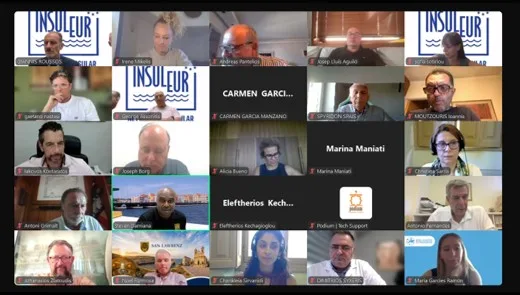
On 8 July 2026, INSULEUR – the Network of the Insular Chambers of Commerce and Industry of the European Union – successfully organised a high-level online workshop entitled “Unlocking Opportunities for Island Businesses: Practical Pathways under the New EU Strategy for Islands (2026)”, bringing together representatives from the European Commission, the European Parliament, the European Committee of the Regions (CoR), the European Economic and Social Committee (EESC), the Cyprus Presidency of the Council of the EU and the CPMR Islands Commission.
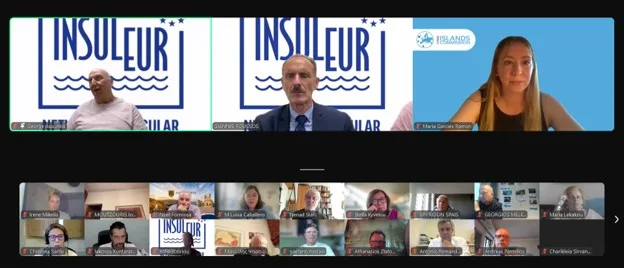
Moderated by George Assonitis, Advisor on EU Affairs and member of the INSULEUR Technical Committee, the workshop provided one of the first institutional discussions following the publication of the European Commission’s new EU Strategy for Islands, exploring how the Strategy can be transformed into concrete policy measures that strengthen the competitiveness, resilience and sustainable development of Europe’s islands.
Opening the event, Giannis Roussos, President of INSULEUR, welcomed participants and underlined the importance of maintaining a strong dialogue between European institutions and island stakeholders in the implementation of the new Strategy. He stressed that INSULEUR will continue to actively contribute evidence-based proposals to ensure that island businesses remain at the centre of future European policymaking.
A milestone for Europe’s islands
The workshop opened with a recorded keynote address by Ms Themis Christophidou, Director-General for Regional and Urban Policy at the European Commission, who presented the newly adopted European Strategy for Islands.
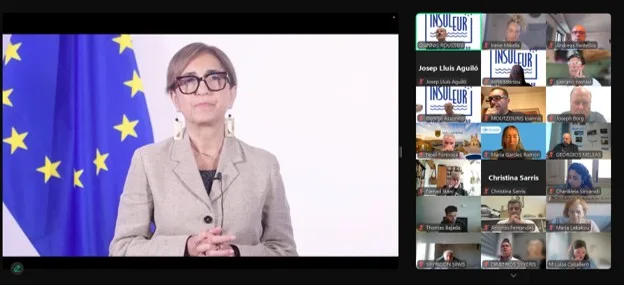
Describing the Strategy as “a milestone”, she emphasised that, for the first time, the European Union has established a common framework dedicated specifically to island territories. She highlighted that the Strategy responds to the structural challenges faced by more than 4,000 inhabited islands and over 17 million Europeans, while recognising islands as strategic assets for Europe’s future.
Ms Christophidou presented the four pillars of the Strategy – economic development and connectivity, energy and climate, people and demographic resilience, and security and crisis preparedness – while stressing that its success will ultimately depend on cooperation between European institutions, Member States, regional and local authorities, businesses and civil society.
“The adoption of the strategy is not the finish line—it is the starting point. Its success depends on all of us.”
She also noted that cohesion policy had already redirected €1.6 billion towards island territories during the recent mid-term review, encouraging all stakeholders to make full use of the opportunities offered by existing and future EU funding instruments.
From recognition to implementation: a shared message from the panel
Although each panelist approached the Strategy from a different institutional perspective, a strong common message emerged throughout the discussion: the Strategy represents a historic political breakthrough, but its success will depend on its effective implementation through concrete legislation, governance mechanisms and dedicated policy tools.
Eleni Marianou: Turning the new framework into practical policy
Representing the Cyprus Presidency of the Council of the European Union, Eleni Marianou welcomed the adoption of what she described as a long-awaited common European framework for islands.
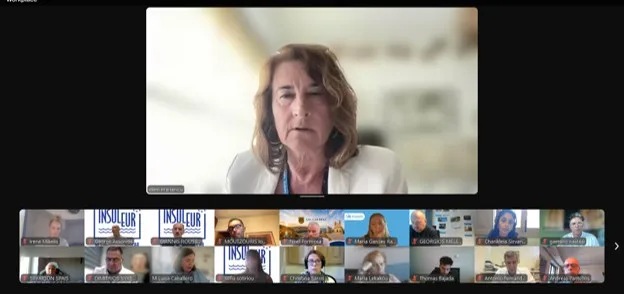
While acknowledging that the Strategy does not introduce new funding instruments, she argued that it provides an important foundation upon which new policy mechanisms can now be built. She highlighted the forthcoming negotiations on the Multiannual Financial Framework (MFF) as a crucial opportunity to integrate an island dimension into future National and Regional Partnership Plans, introduce island-proofing mechanisms and ensure that island-specific concerns are systematically reflected throughout European legislation.
She also drew attention to the close relationship between the new Islands Strategy and the forthcoming Right to Stay Strategy, stressing that both ultimately aim to improve the quality of life of island communities and allow citizens to remain on their islands under equal conditions with the rest of Europe.
“We now have a common European framework for islands… now we need to think a bit out of the box and see how we can actually work with what we have.”
Thomas Bajada: Recognition must now become action
Thomas Bajada, Member of the European Parliament and Vice-President of the SEArica Intergroup, described the Strategy as an important political breakthrough because, for the first time, the European Commission formally recognises the structural realities and costs of insularity.
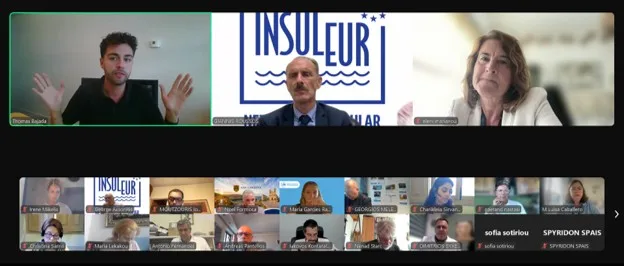
However, he argued that recognition alone is insufficient and called for rapid translation into concrete legislative measures. Drawing on his work as rapporteur on the European Parliament’s opinion on the future National and Regional Partnership Plans, he presented several proposals aimed at giving islands a stronger position within future cohesion policy.
Among these were the introduction of a dedicated chapter on islands within cohesion policy and a preferential co-financing rate of up to 75% for island projects, recognising the permanent structural disadvantages island territories face.
He also encouraged organisations such as INSULEUR to continue advocating towards Members of the European Parliament to ensure these proposals remain in the final legislation.
“The Strategy is a novelty: it is the first time that we are seeing the commission stating facts that we live every single day.. but that this is very far from what is actually needed and what we need is action. The action so far doesn’t exist.”
Noel Formosa: Building Europe’s island opinion together
Delivering one of his first public interventions as Rapporteur of the European Committee of the Regions on the EU Strategy for Islands, Noel Formosa praised the Strategy as a historic achievement resulting from years of collective advocacy by European institutions and island organisations, including INSULEUR.
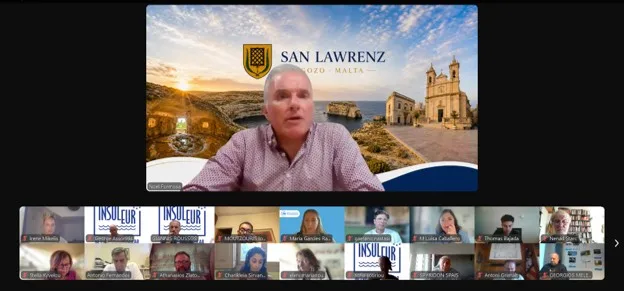
He stressed that his forthcoming opinion for the Committee of the Regions would not simply comment on the Commission’s Strategy, but would seek to strengthen it through an extensive consultation process involving local authorities, businesses, academia, civil society and island networks across Europe.
He also welcomed the Strategy’s recognition of the cost of insularity, describing it as one of its most significant conceptual advances because it finally acknowledges that islands face permanent structural costs requiring tailored policy responses.
Looking ahead, he identified two priorities: ensuring that island-proofing becomes a guiding principle across future European legislation and guaranteeing that regional and local authorities play a central role in implementing the Strategy.
“Today is not the end of the process. Today is the beginning… My responsibility is not simply to draft my opinion. My responsibility is to build our opinion.”
Ioannis Vardakastanis: Towards an Islands Pact and an Islands Act
Speaking on behalf of the European Economic and Social Committee, Ioannis Vardakastanis welcomed the Strategy as an important milestone while emphasising that Europe must now move beyond coordination towards a genuinely integrated island policy.
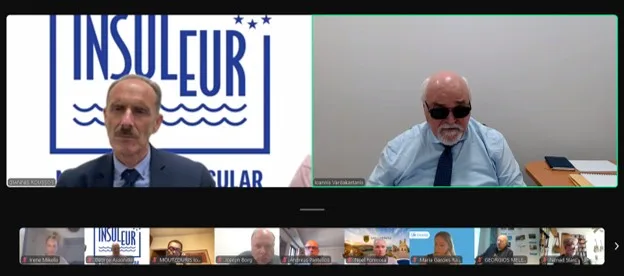
Recalling the EESC’s long-standing advocacy, he reiterated the Committee’s call for an Islands Pact supported by a legally grounded Islands Act, together with the introduction of an insularity clause requiring every major European policy to assess its impact on island territories.
He also stressed that governance will be decisive, arguing that islands should not merely receive European support but should become active partners in designing and implementing future policies.
“Europe must now move from strategy to ambition. Our islands should not merely receive support – they should be empowered to lead.”
Maria Garcies i Ramon: From diagnosis to concrete measures
Closing the panel, Maria Garcies i Ramon, Executive Secretary of the CPMR Islands Commission, welcomed the Strategy’s recognition of the cost of insularity but argued that Europe must now move rapidly from diagnosis to concrete action.
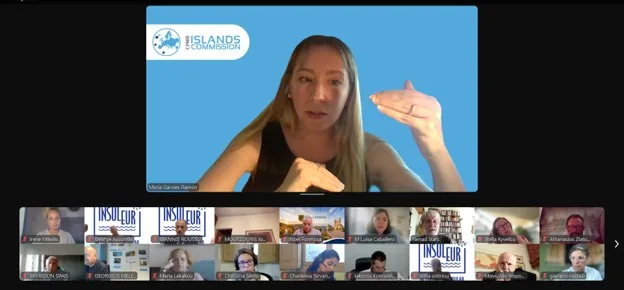
She emphasised that the evidence already exists and that future work should focus less on further analysis and more on adapting State aid rules, transport legislation and funding instruments to the permanent realities of island territories.
She highlighted maritime and air connectivity as essential preconditions for competitiveness and called for territorial impact assessments when revising major European legislation, particularly in relation to climate and transport policies.
Finally, she stressed the close relationship between the Islands Strategy and the forthcoming Right to Stay Strategy, noting that retaining people on islands requires more than preserving public services—it requires creating opportunities for businesses, innovation and quality employment.
“The strategy seems to be more a diagnosis exercise rather than proposing concrete actions… now the translation from recognition to adapted legislation, funding and opportunities needs to accelerate.”
WATCH THE RECORDING OF THE WORKSHOP > https://www.youtube.com/watch?v=yaDI-gMbFaY