EESC hearing in Syros brings the realities of island life and entrepreneurship to the heart of the European policy debate
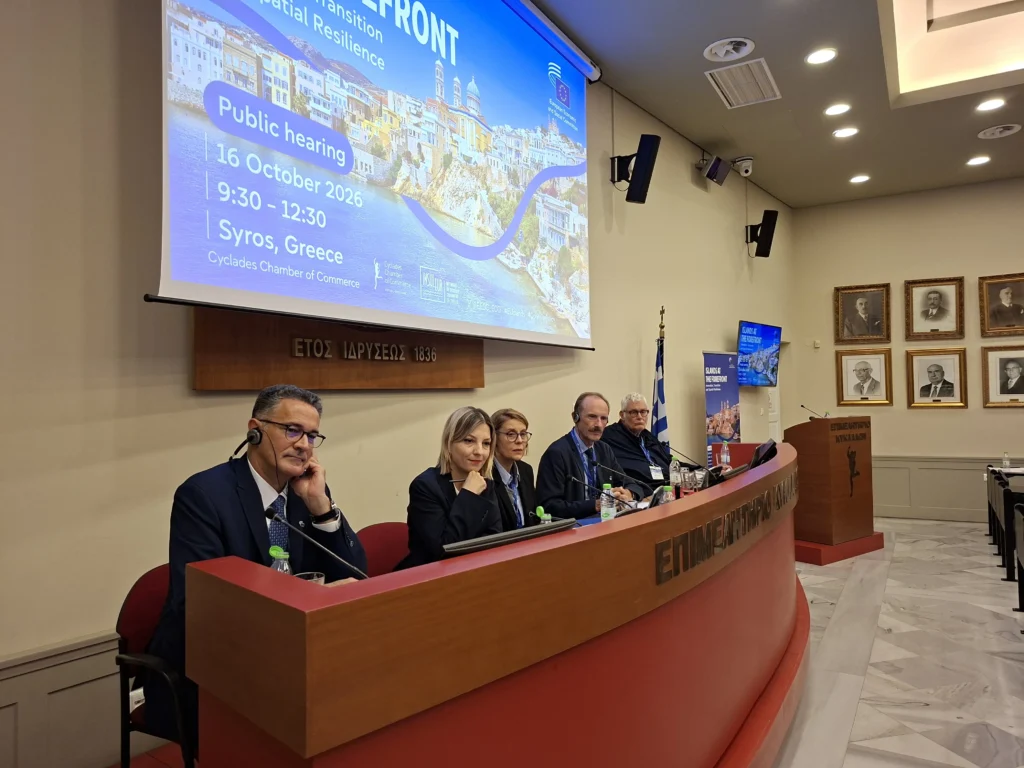
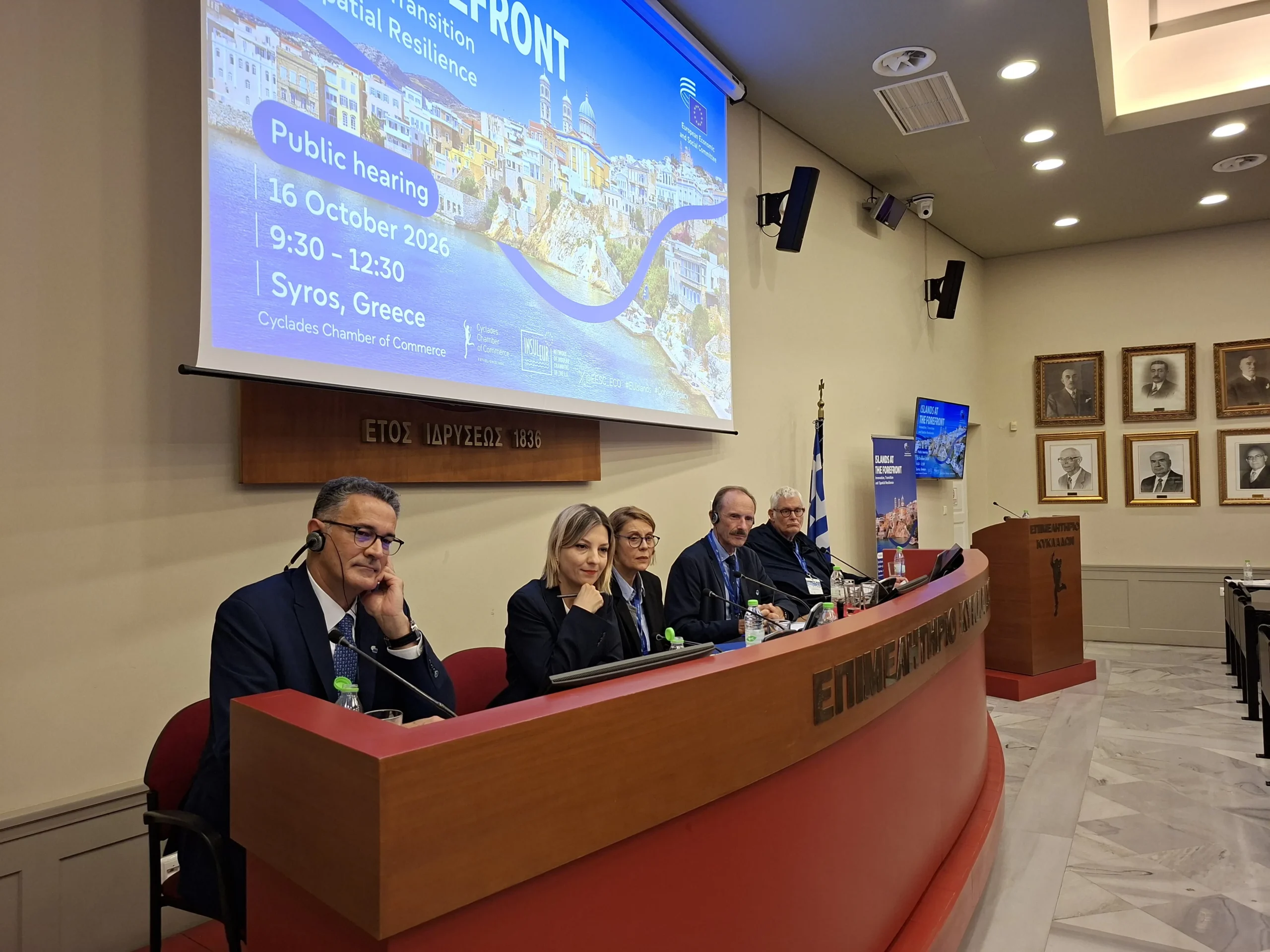
The future of Europe’s islands depends on ensuring that people can continue to live, work and build their livelihoods there with dignity. This was the central message emerging from a public hearing held in Syros, Greece, on 16 October 2026, by the European Economic and Social Committee (EESC) ECO Section, in cooperation with the Cyclades Chamber of Commerce and the Network of Insular Chambers of the European Union (INSULEUR).
Held as part of the preparation of the EESC’s opinion on the EU Strategy for Islands, the hearing brought together European representatives, local entrepreneurs and producers, who shared first-hand experiences of the challenges facing island economies and communities.
Their contributions highlighted a common reality: geographical constraints, transport constraints, high operating costs, pressure on land and natural resources, and seasonal fluctuations all shape the way businesses operate and communities function on the islands. These challenges cannot be adequately addressed through policies designed primarily for mainland conditions.
Giving island businesses a voice in European policymaking
The discussions demonstrated how closely economic activity, the preservation of local identity and the ability of island communities to remain vibrant are interconnected.
Highlighting the difficulties of transporting local products between islands, a member of the Cyclades Chamber of Commerce observed: “Today, it is easier to reach the Moon than to bring Volaki cheese from Andros to Irakleia.” His remark captured the practical barriers that can undermine local production and trade, even within the same island region.
Other participants stressed the need to strengthen links between tourism and local production, protect agricultural land and traditional landscapes, and ensure that small businesses can operate under conditions that reflect the specific realities of island economies.
Water, energy and infrastructure resilience were also central to the discussion. Participants stressed the need for infrastructure and essential services that meet the needs of residents throughout the year and not merely designed around the peak season demand alone.
Together, these contributions illustrated that island policy must address not only the competitiveness of local businesses, but also the conditions that enable people to remain on their islands and pass on their knowledge, skills and traditions to future generations.
From the Right to Stay to concrete European action
EESC rapporteur Stéphane Bijoux highlighted the importance of listening directly to island communities and ensuring that their experiences inform European policymaking. He referred to several key priorities, including access to affordable housing for young people, the promotion of local food and products, and the challenges associated with water and energy management.
Emphasising the need for tangible action, he assured participants that the concerns and proposals expressed by island stakeholders would be brought to the attention of European Institutions, stressing that island communities are asking for practical solutions that uphold their dignity.
EESC ECO Section President Elena Calistru also noted that the difficulties encountered in reaching the islands offered a direct illustration of the connectivity challenges they face. She stressed that islands are not merely tourist destinations but contribute to Europe’s wider economy and deserve policies that reflect their strategic importance.
She also emphasised the principle of the Right to Stay: ensuring that young people and island residents have the opportunities, services and living conditions they need to remain in their communities by choice, rather than being compelled to leave.
A shared commitment to a European Strategy for Islands
The hearing also highlighted the contribution of the Cyclades Chamber of Commerce, which has submitted a detailed policy memorandum to the relevant European institutions and developed proposals across 11 policy areas, following consultation with its members. The Chamber has also participated in the Greek government’s consultation on island policy.
Speaking at the hearing, Cyclades Chamber President Giannis Roussos underlined the significance of the EESC choosing Greece and the Cyclades, for the first time, as the venue for such a meeting. He stressed that island communities possess the knowledge, experience and proposals needed to contribute meaningfully to the development of European policies.
Through its cooperation with the Cyclades Chamber and its wider European network, INSULEUR continues to advocate for a clear and effective EU Strategy for Islands, supported by concrete measures and instruments tailored to island realities, including targeted EU funding instruments and support measures that respond to the specific needs of island businesses.
The hearing in Syros reaffirmed the importance of bringing the experience of island businesses directly into the European policy process. A European strategy must recognise the diversity of island territories and translate that recognition into practical solutions that strengthen local economies, support small businesses and safeguard the long-term viability of island communities.
For INSULEUR, ensuring that islands remain places where people can live, work and create their future is essential to achieving a more cohesive and resilient Europe.
Watch the full video of the public hearing on the Cyclades Chamber of Commerce’s YouTube channel: https://www.youtube.com/@cycladeschamber/videos
Download the Press Release in a selected language
English I Greek I Spanish I Maltese I Dutch I Portuguese I French I Italian