Chios, July 1st, 2024
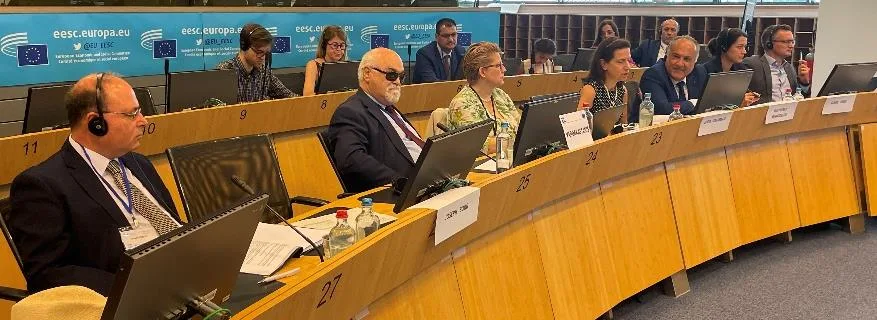
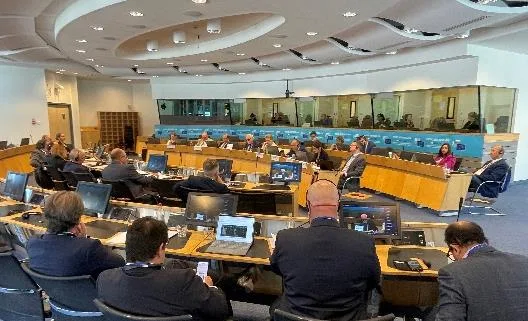
Brussels, June 28, 2024 – The Network of Insular Chambers of Commerce and Industry of the European Union (INSULEUR) organized a pivotal workshop at the European Economic and Social Committee (EESC) in Brussels, focusing on the future of EU islands within the framework of the post-2027 Cohesion Policy. This event, held under the auspices of the EESC with the support of the Conference of Peripheral Maritime Regions Island Commission (CPMR) and the European Small Islands Federation (ESIN) gathered experts, policymakers, and stakeholders to address the unique challenges and opportunities faced by EU islands.
During the workshop, Ioannis Vardakastanis, President of the ECO Section of the EESC, emphasized the necessity of a cohesive and inclusive approach to EU policies that consider the unique challenges of island regions. He stressed the importance of targeted support and the implementation of the Islands Pact, advocating for a more integrated, place-based approach to policymaking to ensure the sustainable development of island regions. He stated, “The EESC strongly believes that greater efforts must be made by the EU to recognize the uniqueness of the challenges facing islands […] In this context, organized civil society has an important role to play.[…]We must guarantee that, in every corner of Europe, the inequalities that prevent the achievement of upward economic and social cohesion will disappear at all levels. The 9th Cohesion Report shows that economic disparities remain wide across the continent and especially on the islands”. A position shared by Joseph Borg, President of INSULEUR, who remarked on the critical juncture for the future of European island regions: “The unique challenges and opportunities faced by our islands necessitate focused attention and policy frameworks to ensure their sustainable development and seamless integration into the broader European agenda.”
Her Excellency the Ambassador of Greece to Belgium, Mrs Sofia Grammata, also made a compelling call to action for EU policymakers to recognize and act upon the specific needs of islands through her intervention blending diplomatic acumen, personal insight, and a strong advocacy for policy changes that reflected the realities and potential of island regions within the EU and underscoring the real-world impact of EU policies on island communities. “No region should be left behind”, she voiced, setting the tone of the workshop, further to the intervention of Eleftherios Kechagioglou, President of the Hellenic Small Islands Network (HSIN) who provided an overview of the increasing desertification of islands and the necessity for EU policies to address the specificities of islands. HSIN President indeed emphasized among other the need for inclusive maritime transport but also the creation of specific indicators for islands, setting set the stage for Danai Krokou, Project Officer at INSULEUR who then presented insights from the first comprehensive demographic study of insular economies within the EU and highlighted the importance of addressing connectivity infrastructure deficits and economic vulnerabilities to integrate these regions into the broader EU economy. A study which lays the groundwork for the creation of a much needed Observatory of insular economies for which INSULEUR has always advocated for as reminded by Mr George Assonitis, member of the technical committee of INSULEUR.
“Will islands get fully recognized in the upcoming Multiannual financial framework, and will there still be a Cohesion Policy as we know it, rooted in its fundamental principles.?”, asked Claire Haley, Project and Policy Officer at the CPMR Island Commission, requesting the European Commission to take seriously into account the renewed calls in favor of a better acknowledgment of insularity, through a Pact for Islands and reminding the worrying islands’ reality together with the CPMR’s advocacy work and most recent positions on the future of Cohesion Policy. In response, Manolis Koutoulakis, Secretary General for Insular Policy and the Aegean, Greek Ministry of Maritime Affairs and Insular Policy, and Benoit Nadler, Deputy Head of Unit – Policy Development and Economic Analysis – Regional Policy – European Commission, acknowledged these concerns and demonstrated a commitment to addressing them in future policies. Indeed, Mr. Koutoulakis, which has consistently stood alongside insular communities and steadfastly supporting them, highlighted the Greek government’s efforts to better manage regional policy resources and stressed the necessity of allocating a specific percentage of community funds to islands, reinforcing his longstanding support for insular communities and local actors while Benoît Nadler emphasized the progress made through consultations for the post-2027 period, underscoring the crucial role of islands as local partners, in the implementation and development of the cohesion policy.
The positive strides of the workshop underscore the collective commitment to integrating island-specific needs into broader EU policies. However, the workshop also highlighted the long journey ahead to fully realize these goals, emphasizing the need for continued advocacy, targeted support, and robust policy frameworks to ensure sustainable development and resilience for EU islands. INSULEUR extends its gratitude to all participants for their valuable contributions and remains dedicated to ensuring that the unique challenges and opportunities of insular regions are recognized and addressed in future EU policies by playing a pivotal role in shaping policies that support the sustainable development and resilience of EU islands.
You can read the full Press Release in English and Greek below.